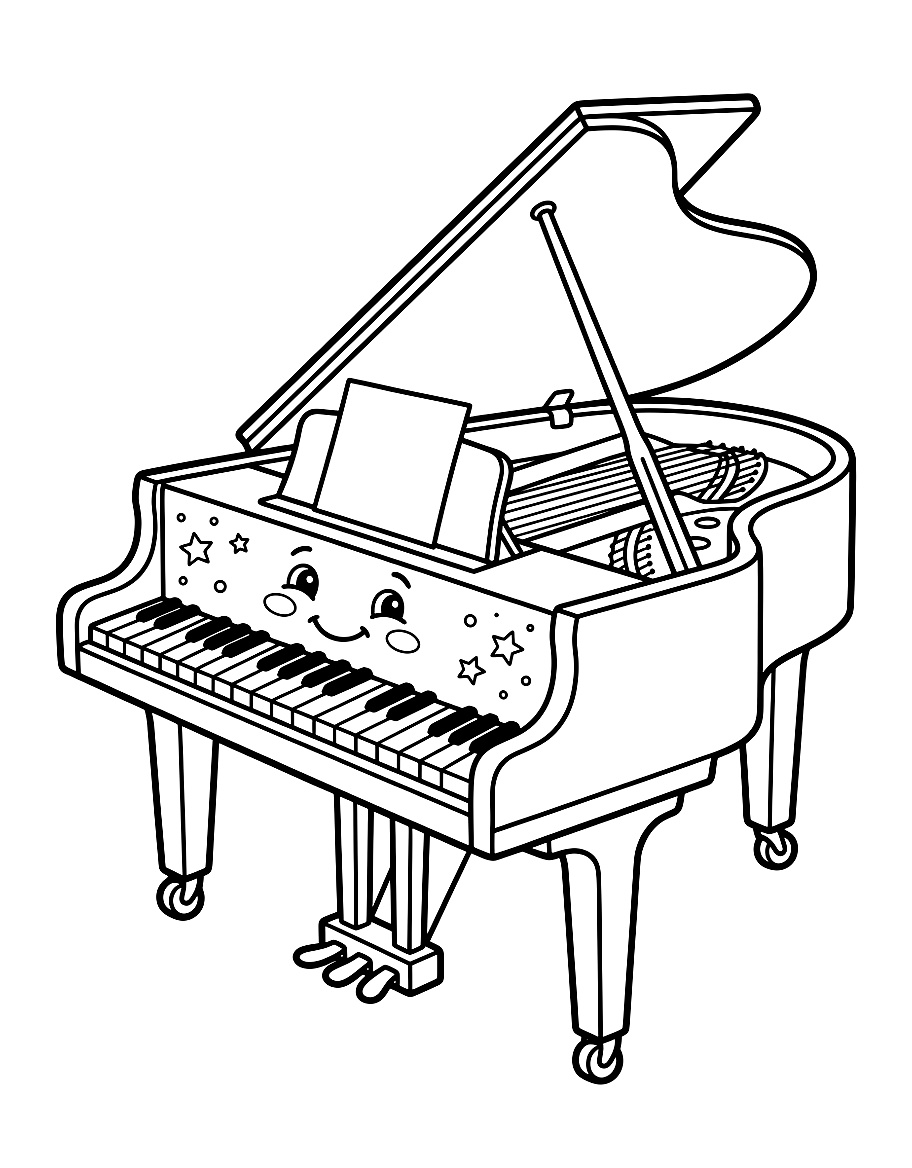
Classic Baby Grand Piano Learning & Activity Guide
Fine Motor Skills & Grip Development
The illustrated paths across “Classic Baby Grand Piano” encourage hand-eye dexterity and sharpens visual tracking and manual dexterity needed for pencil control. Designed for early elementary children, completing “Classic Baby Grand Piano” invites defining tuning keys on sound chambers and sound waves. Navigating these outlines trains visual planning and fosters appreciation for musical rhythm.
Creative Discussion & Story Starters
Pair the artistic process on “Classic Baby Grand Piano” with playful verbal prompts that stimulate reasoning. Challenge your colorer to create a story explaining what musical style or concert venue suits it best inspired by “Classic Baby Grand Piano”. Exploring how grand-piano concepts integrate with sound chambers in “Classic Baby Grand Piano” builds observational acuity and language.
Recommended Art Mediums & Paper Selection
Achieving vibrant coloring on “Classic Baby Grand Piano” starts with choosing suitable art implements. For “Classic Baby Grand Piano”, Dual-tip markers give children flexible line choices for small spots and wide fills. Medium-weight 24 lb copy paper produces clean, glare-free black outlines. Adding background gradients or contrasting tones along sound waves adds vibrancy without cluttering outlines.